
Everyone talks about AI – but our speakers keep talking about people
AI dominates cybersecurity conversations right now – but our conversations with speakers at Black Hat MEA 2025 revealed that people are just as important.
Read More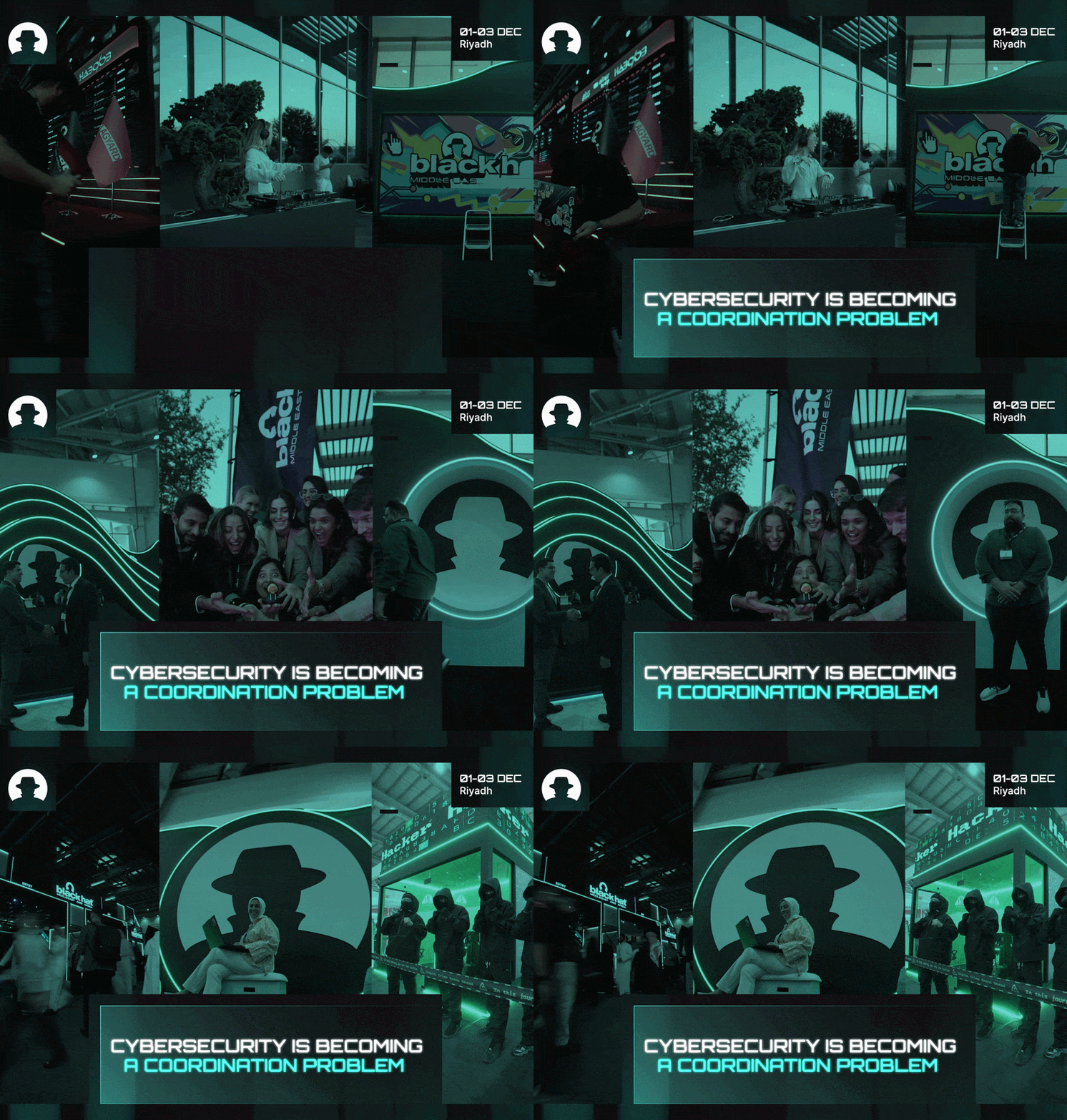
Explore our weekly delivery of inspiration, insights, and exclusive interviews from the global BHMEA community of cybersecurity leaders.
Keep up with our weekly newsletters on LinkedIn — subscribe here.
Interviews and insights from the global Black Hat MEA community – in your inbox every week.
The immense task of coordinating loads of different things towards the same goal: cyber resilience.
Because when we walked the floor at Black Hat MEA 2025, we noticed that instead of talking about tools in isolation, people were talking about how everything fits together.
One CISO explained how their team was experimenting with AI in production. Another described the challenge of stitching together identity signals across systems. A third was comparing notes on how attackers are coordinating campaigns across regions.
If we stitch all of this together and then peer underneath, we see that cybersecurity is becoming a coordination problem.
AI is at the heart of this shift, but not as a standalone story.
As Yassir Abousselham (CISO at Calendly) put it when we asked about his focus for the year ahead:
“So it's AI everything.”
That much is obvious; but what’s less obvious is what comes after adoption.
Instead of replacing existing systems, AI plugs into them. It generates more decisions and more actions, and that creates a new layer of complexity: how those outputs connect to people, processes, and other systems.
In practice, that is where pressure starts to build.
Gary Hayslip (CISO at Halcyon) said:
“Security is playing catch up to what the cyber criminals are doing. They can scale and be innovative a lot faster than the security community can.”
Attackers coordinate naturally – sharing tools and automating workflows, and moving quickly across targets. Defenders often operate across fragmented environments, where intelligence sits in one place, decisions in another, and response somewhere else entirely.
This is where cybersecurity starts to look more like an operating system than a technology stack.
So the organisations that will perform best are the ones that can connect everything together:
In short: coordination.
Stefan Baldus (CISO at Hugo Boss) told us “the combination of human and AI will be shaping us next year.”
And then there’s the systems challenge running alongside it all. As Dan Meacham (Vice President of Security at Legendary Entertainment) pointed out, “what we’re missing is how all these different AI things work together.”
That’s where the market is heading. Less focus on point solutions, more on integration, identity, and orchestration layers that can connect activity across environments.
For all the talk of automation, the most consistent theme across these conversations is still human – in the sense of how teams think, and make decisions under pressure.
Jameeka Green Aaron (CISO at Headspace) grounded it in purpose:
“We’re here to protect people…that is our number one goal in cybersecurity.”
And that idea extends beyond individual organisations. Priya Mouli (CISO at Sheridan College) made a comparison that stayed with us:
“We have one thing to learn from the threat actor…they are all a very tight knit community across the globe.”
Attackers coordinate. Increasingly, defenders are realising they need to do the same.
The cybersecurity industry has spent years building better tools. Now we’re being forced to figure out how those tools work together.
Register now to attend Black Hat MEA 2026, and position yourself at the centre of cybersecurity evolution. We can’t wait to see you there.
Join the newsletter to receive the latest updates in your inbox.
AI dominates cybersecurity conversations right now – but our conversations with speakers at Black Hat MEA 2025 revealed that people are just as important.
Read More
Security teams have more data than ever, but many still struggle to prioritise risk and openly discuss breaches. Here’s why knowing the problem is only half the battle.
Read More
In an era of webinars, virtual demos and AI-generated content, Black Hat MEA shows why the cybersecurity industry still invests in getting people together.
Read More