
Knowing the path isn't the same as walking it
Security teams have more data than ever, but many still struggle to prioritise risk and openly discuss breaches. Here’s why knowing the problem is only half the battle.
Read More
Secure your business and build cyber resilience with Black Hat MEA – in your inbox every week.
People.
Because AI is everywhere. At Black Hat MEA 2025, it was in the keynotes and the product launches, and in pretty much every conversation about the future of cybersecurity.
Unsurprisingly, AI came up in almost every interview we did with speakers from across the cyber ecosystem. But those interviews never stayed focused on AI alone.
Because our speakers kept bringing the discourse back to people.
As William Lin (Co-Founder and CEO of AKA Identity) pointed out, “Cybersecurity technology has become a global problem.”
As organisations become more connected, attackers don’t respect industry boundaries or national borders. Several speakers argued that defenders need to respond in the same way – by learning from one another and sharing experience.
David Cass (CISO at Keyrock) highlighted the value of bringing different sectors together:
“It's very nice to see my peers who are in other industries so we can compare notes... and really share our lessons.”
For many of the leaders we spoke to, that exchange of ideas is just as valuable as hearing about the latest technologies.
One observation stood out across several conversations: attackers already collaborate remarkably well.
Priya Mouli (CISO at Sheridan College) believes defenders should take note.
“We have one thing to learn from the threat actor or the hacker group. They are all a very tight knit community across the globe, so it's about time we became a tight knit community as well.”
Stefan Baldus (CISO at Hugo Boss) made a similar point:
“The bad guys do this on a day to day basis. And we as the good guys guarding our companies we talk too less with each other.”
The message was consistent. Technology is essential, but resilience also depends on relationships between people.
The value of community and knowledge-sharing is bigger than today’s security teams.
Temi Adebambo (General Manager for Gaming Security at Microsoft) suggested that events like Black Hat MEA offer an opportunity to grow the profession itself.
“I think it's a great way to grow the industry, grow the presence in the region, and educate the next generation as well.”
And Dan Meacham (Vice President of Security at Legendary Entertainment) focused on another benefit of bringing the industry together:
“You really get an opportunity to meet some of the legends that you have in our industry... and to network.”
Those connections often become just as valuable as the sessions themselves.
Cybersecurity has always been about more than technology. It's about the people defending organisations every day, and the communities that help them learn, adapt and respond together.
That's why Black Hat MEA exists: to bring together experts from across industries and around the world, creating the conversations and partnerships that help the entire cybersecurity ecosystem become more resilient over time.
Ready to be a part of it? Register now to attend Black Hat MEA 2026.
Join the newsletter to receive the latest updates in your inbox.
Security teams have more data than ever, but many still struggle to prioritise risk and openly discuss breaches. Here’s why knowing the problem is only half the battle.
Read More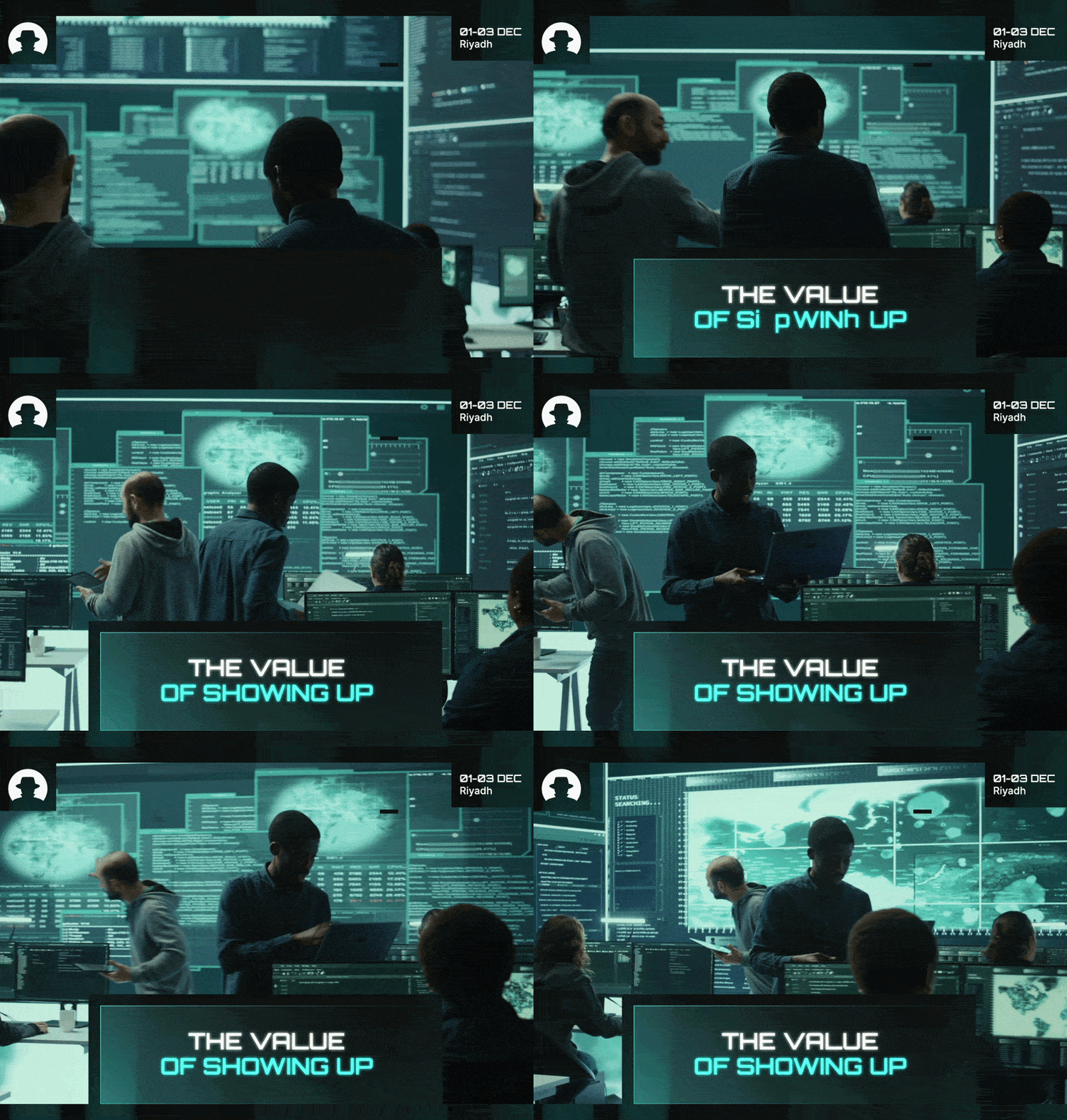
In an era of webinars, virtual demos and AI-generated content, Black Hat MEA shows why the cybersecurity industry still invests in getting people together.
Read More
What do a global cruise operator and a private equity firm have in common? Two US CISOs explain why cybersecurity fundamentals transcend industry.
Read More