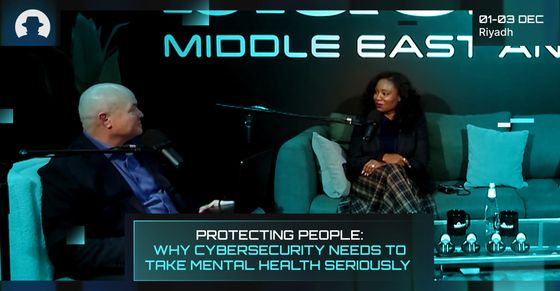
Cybersecurity leaders protect people as well as systems. Learn why Jameeka Green Aaron (CISO at Headspace) believes mental health and burnout prevention are essential to cyber resilience.
In the realm of cybersecurity start-ups, there is a widely held belief that the key to success lies in obtaining investor capital. However, recent data from Crunchbase shows a significant 35% decline in funding, raising the question of whether this belief still holds true.
Neil J. Walsh will discuss various interpretations of cybercrime, divergent regulatory frameworks, and discrepancies in digital forensic capabilities. Ensuring the accuracy of cybercrime reports worldwide poses a significant challenge
Data alone is not intelligence – but unified security systems can build an understanding of context around a piece of data, enabling better threat identification and decision-making.
There’s no globally accepted definition of cyber diplomacy or cyber crime. Developing those cross-border agreements is an important step to enable cooperation and resilience.
Betania Allo explains why AI governance fails in practice and how the Intelligent Control Stack brings real-time monitoring, accountability, and control to autonomous systems in production.
Discover a practical model for AI governance that applies cybersecurity principles to real-time monitoring, control, and accountability in production systems.
Third-party cyber risk now stems more from shared dependencies than weak vendors. New research explains why supplier concentration is becoming the biggest supply chain threat.
What life as a CISO looks like in 2026: overtime, AI governance, board pressure and burnout – plus why most cybersecurity leaders would still choose the job all over again.