
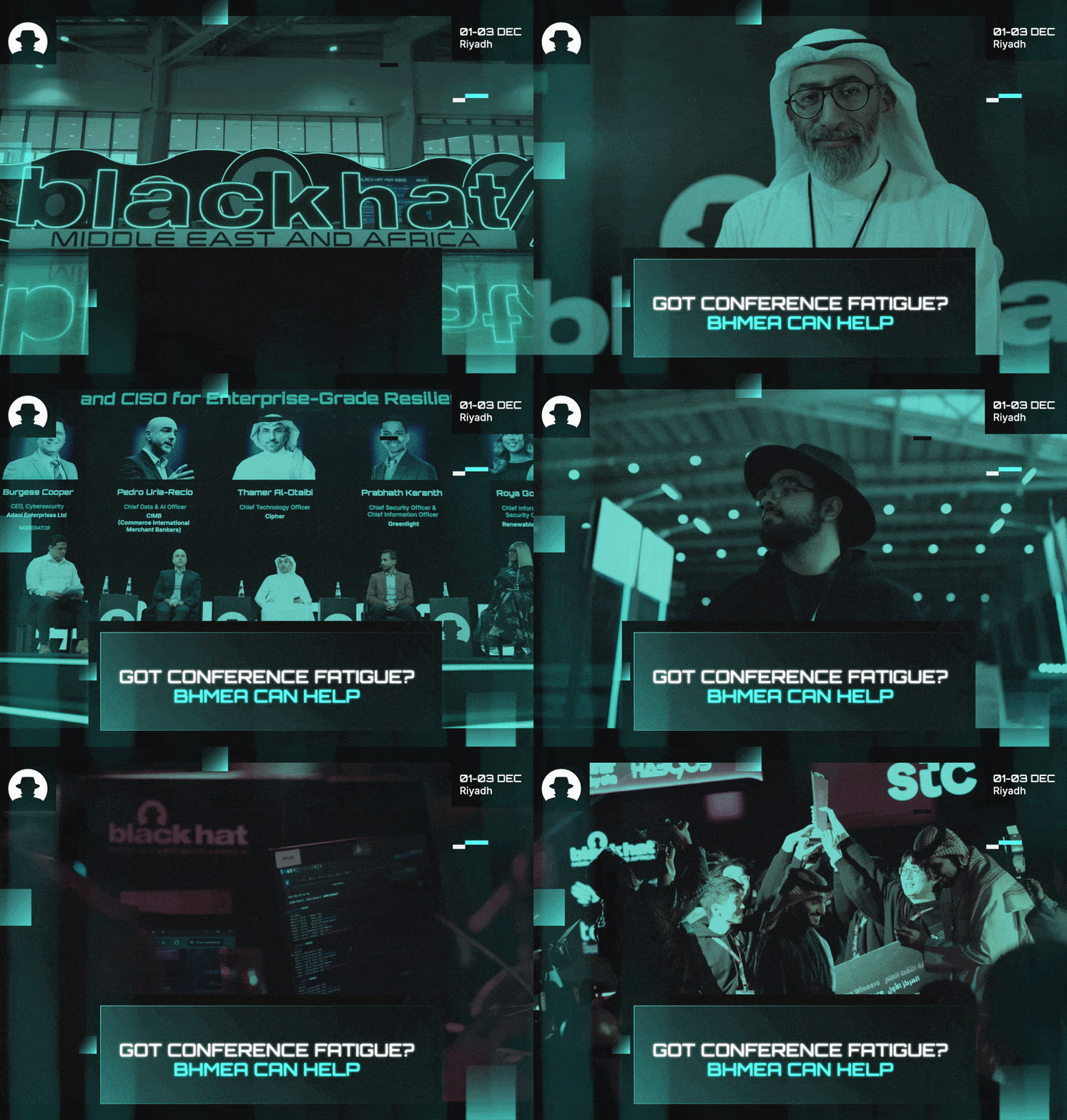
Got conference fatigue? BHMEA can help.
Black Hat MEA is redefining the cybersecurity conference experience. CISOs share why it feels more intentional, collaborative and energising – and how that drives resilience.
Read More
Explore our weekly delivery of inspiration, insights, and exclusive interviews from the global BHMEA community of cybersecurity leaders.
Keep up with our weekly newsletters on LinkedIn — subscribe here.
Exclusive interviews and industry-shifting insights from the global Black Hat MEA community – in your inbox every week.
Not being (or pretending to be) flawless.
As a security leader (or as a cybersecurity practitioner at any level, really) your instinct might be to project certainty. You feel pressure to be technically flawless, decisive, and unshakeable.
But when we spoke to Jerich Beason (CISO at WM) for the blog, we found out that one of the most important leadership lessons he’s learned came from doing the opposite.
Early in his career, Beason apologised to his team after a funding decision didn’t land as intended. Not as a formality – but as an act of accountability.
“I have always believed that leadership is not about being flawless. It is about being human and trustworthy. By admitting where I got it wrong, I showed that accountability is not just something I demand from them. It is something I model myself.”
For CISOs operating under constant pressure, that kind of openness can feel risky. But Beason argued the opposite: teams quickly sense when leaders deflect or spin – and trust erodes fast.
Transparency, he said, isn't a weakness. It’s how you build durable teams.
Another turning point came when Beason realised that technical brilliance doesn’t automatically translate into leadership impact.
“I had presented a technically flawless case for a security investment, but I walked out of the room with no buy-in. I realised that I had won the argument but lost the room.”
That moment forced a rethink. Leadership, he learned, is about alignment – not about proving intelligence.
“Success was creating consensus so that the team and business moved forward together.”
It also helped reframe imposter syndrome – not as something to overcome by “tech flexing”, but as a reminder to focus on service, collaboration, and shared outcomes.

Beason was equally clear that trust and transparency play a critical role in making cybersecurity a more inclusive industry.
“Transparency about decisions like why budgets are cut, why someone was promoted, and how risks are prioritised helps eliminate the hidden rules that often disadvantage underrepresented groups.”
Psychological safety, he argued, is foundational to resilience – and to ensuring diverse voices can contribute meaningfully.
In Beason’s words:
“Shift your mindset from being the smartest person in the room to being the connector in the room.”
Technical expertise is important. But leadership is about translation and influence; and most importantly, trust. Especially when outcomes sit outside your direct control.
You don’t have to be flawless this year.
But the way you lead (especially when things go wrong) will matter more than ever.
If you want to learn directly from cybersecurity leaders who’ve already overcome the challenges you’re facing today, join us at Black Hat MEA 2026. You’ll be inspired to lead with confidence.
Until then – read the full interview with Jerich Beason.
We’ll see you back in your inbox next week.
Join the newsletter to receive the latest updates in your inbox.
Black Hat MEA is redefining the cybersecurity conference experience. CISOs share why it feels more intentional, collaborative and energising – and how that drives resilience.
Read More
Ransomware now encrypts in three hours. OT attackers are mapping control loops. The common thread is discipline – and preparation.
Read More
If attackers collaborate daily, why don’t defenders? Stefan Baldus (CISO at Hugo Boss) reflects on global cyber cooperation at Black Hat MEA.
Read More