

Has AI hype reached its peak?
AI hype is peaking. Dr Rumman Chowdhury explains why use cases remain limited, AGI definitions are shifting, and investors are starting to question the narrative.
Read More
Cybersecurity has firmly entered the CFO agenda. According to the 2025 CFO Priorities Survey from Jefferson Wells, it’s the second-biggest strategic concern for CFOs, sitting just behind profitability. It’s also a board-level priority, with 25% of directors naming cybersecurity among their top issues in 2025.
When CFOs list what ‘keeps them awake at night,’ 27% put cybersecurity on the list – alongside cost optimisation, competition, and navigating economic uncertainty.
This is telling. CFOs are no longer passive stakeholders in security; they see cyber risk as an operational and financial vulnerability (which is a good thing). But profitability still dominates the finance agenda; so CISOs will need to frame cyber investments as drivers of value, resilience, and competitive advantage, not just threat mitigation.
One of the most notable findings is the confidence CFOs have in their organisations’ cyber readiness.
In the section exploring agility and innovation under pressure, 63% of CFOs say their company can ‘pivot and respond well’ to cybersecurity risks. Another 35% say it takes time but they get there, and only 2% say they can’t respond effectively.
CFOs also report ‘a high level of confidence’ in their organisations’ cybersecurity capabilities overall.
And involvement is high:
For CISOs, CFO confidence is both a positive and a challenge. CFOs believe their organisations can adapt quickly to cyber risks – a perspective that security teams might not share, given tooling gaps, attack surface complexity, and increasing pressure from AI-augmented threats.
And this makes expectation-setting a critical leadership skill for CISOs in the year ahead.
When asked where they plan to invest in technology next year, 43% of CFOs put cybersecurity tools on the list.
But it ranks below AI (69%), financial reporting systems (56%), and automation (52%). In terms of budget dynamics, cybersecurity has crept up the priorities list, but it’s still not the primary concern.
And there’s also a significant shift toward external expertise. When CFOs were asked where they expect to rely on third party providers in 2025, the top categories were:
We think this is one of the report’s most important findings. CFOs recognise they don’t have enough in-house capability to manage emerging risks. They expect to buy expertise rather than build it.
And when selecting service providers, CFOs prioritise:
For cybersecurity leaders, this is good news. CFOs are explicitly saying they’ll put expertise over cost. CISOs can lean into that when making the case for specialised partners, advanced tooling, and specialised headcount.
If you’re a CISO who wants to build stronger alignment with finance leaders next year, the report outlines three clear opportunities.
The research shows that CFOs are becoming more active in cybersecurity. They’re growing in confidence, they’re getting more hands-on, and they’re ready to spend.
This is an opportunity for CISOs to translate risk into business outcomes and anchor investments in transformation. And importantly, use your CFO’s appetite for external support to build resilience faster.
If you can meet finance leaders where they are, your organisation will be stronger for it.
Join the newsletter to receive the latest updates in your inbox.
AI hype is peaking. Dr Rumman Chowdhury explains why use cases remain limited, AGI definitions are shifting, and investors are starting to question the narrative.
Read More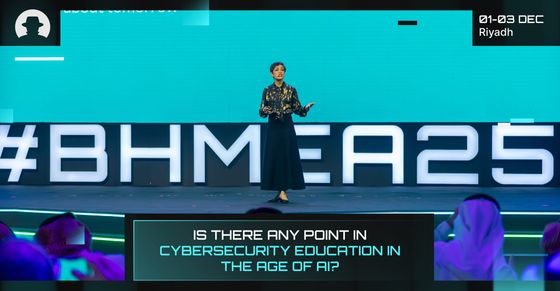
Is cybersecurity education still relevant in the age of AI? Dr Rumman Chowdhury explores how AI is reshaping learning, expertise, and the skills security professionals need.
Read More
Ransomware is evolving beyond encryption. 2026 threat reports reveal the rise of data-leak extortion, pre-encryption exfiltration and a growing ecosystem of cybercriminal groups targeting sensitive data.
Read More