
Has AI hype reached its peak?
AI hype is peaking. Dr Rumman Chowdhury explains why use cases remain limited, AGI definitions are shifting, and investors are starting to question the narrative.
Read More
The cybersecurity industry has been pushing for stronger privacy protections for years – and for good reason. Consumers are more privacy-aware, regulators are tightening rules, and organisations are under pressure to minimise data collection and tracking.
But new research from fraud prevention firm Fingerprint suggests that this progress comes with an unintended side effect: fraud visibility is shrinking, and attackers are adapting faster than defenders.
According to the report, privacy-first technologies are now actively reshaping the fraud landscape – not by stopping attacks, but by making them harder to see.
Fingerprint’s researchers found that privacy-first technologies are no longer a marginal issue for fraud teams. Over one-quarter (27%) of respondents say these technologies severely impact their fraud detection capabilities, while a further 49% report a moderate impact.
That means more than three-quarters of organisations are experiencing reduced detection capability as a direct consequence of privacy controls, from browser restrictions to regulatory requirements.
The problem becomes even sharper when it comes to identifying users accurately. Forty percent of respondents say privacy-first technologies are significantly reducing their ability to identify users, with another 51% reporting moderate impacts.
In short: detection is harder, attribution is weaker, and confidence in signals is eroding.
The report is explicit about what this creates. Privacy-focused browsers, VPNs, consumer privacy preferences, and regulatory constraints are “collectively creating blind spots that sophisticated fraudsters are learning to exploit”.
This is important because fraud has already shifted. AI-powered attacks now account for 41% of attacks targeting organisations, and 99% of surveyed organisations have experienced measurable losses linked to AI-driven fraud in the past year.
When attackers can automate, scale, and adapt (while defenders lose visibility), the balance tips quickly.
The impact of privacy-first technologies isn’t evenly distributed. B2B SaaS organisations report the most severe effects, with 57% saying privacy-first tools are significantly reducing identification accuracy. That compares with 32% in fintech and 27% in banking.
This reflects a structural challenge. B2B SaaS platforms often serve privacy-conscious enterprise customers while operating high-velocity, account-based systems – exactly the conditions where reliable identification matters most.
Perhaps the most telling conclusion in the report is not about attackers, but about defenders. While awareness of AI-driven fraud and privacy trade-offs is high, organisational responses remain “uneven and often inadequate”.
Many organisations are still relying on fraud prevention approaches designed for a world with stronger identifiers and slower attackers. That world no longer exists.
Privacy-first technologies aren’t the enemy, not by a long stretch. But we can’t pretend they don’t change the fraud equation. As AI-powered fraud scales and privacy continues to change or reduce visibility, organisations that don’t adapt will face compounding risk: more attacks, less clarity, and shrinking margins for error.
We can’t choose between privacy and security. But the challenge ahead is to build fraud strategies that withstand both.
Join the newsletter to receive the latest updates in your inbox.
AI hype is peaking. Dr Rumman Chowdhury explains why use cases remain limited, AGI definitions are shifting, and investors are starting to question the narrative.
Read More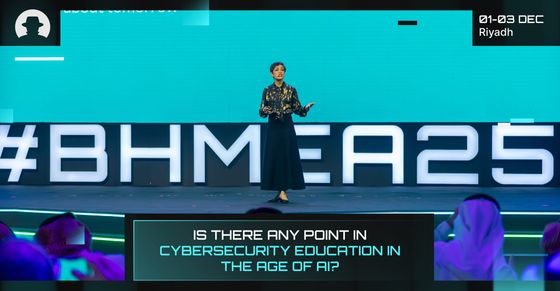
Is cybersecurity education still relevant in the age of AI? Dr Rumman Chowdhury explores how AI is reshaping learning, expertise, and the skills security professionals need.
Read More
Ransomware is evolving beyond encryption. 2026 threat reports reveal the rise of data-leak extortion, pre-encryption exfiltration and a growing ecosystem of cybercriminal groups targeting sensitive data.
Read More